
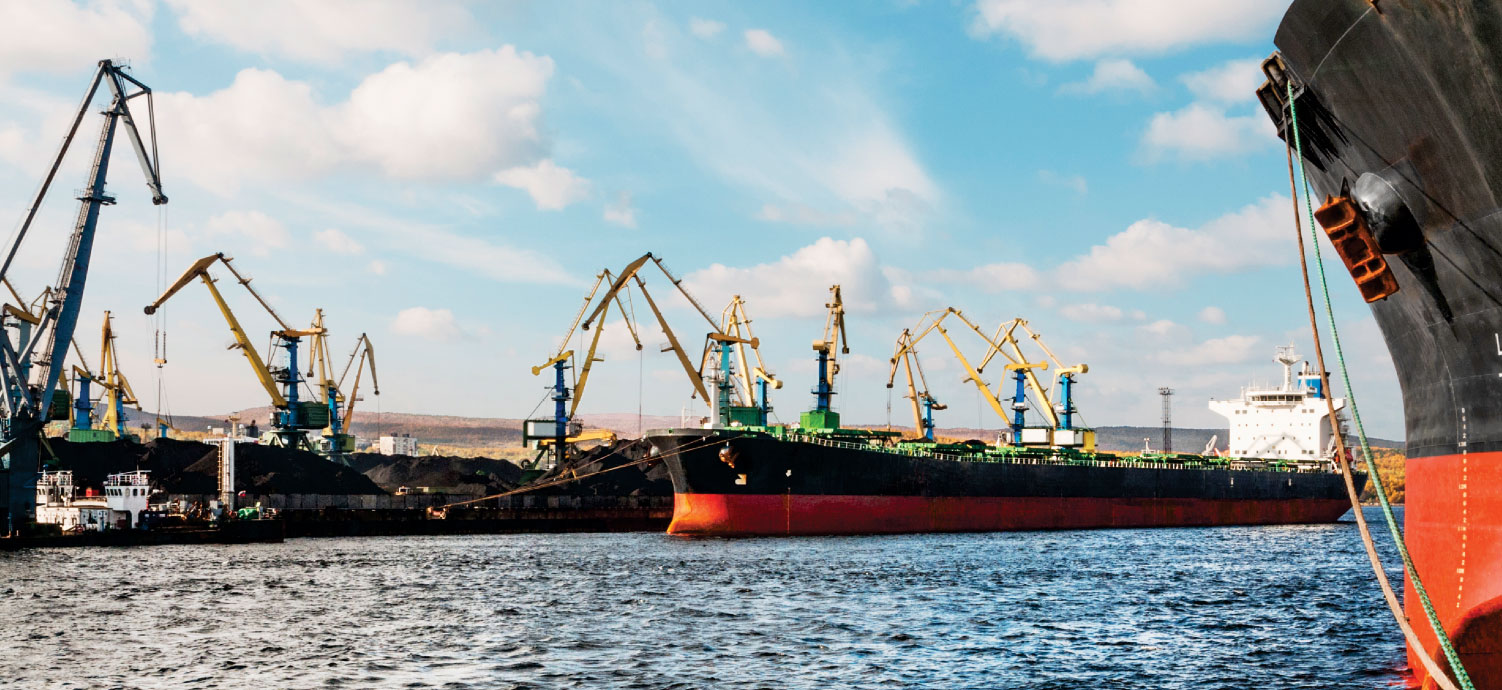
This customer receives barges several times a month, and sometimes more frequently depending on the demand. The raw material travels on top to feed the silos. This powder has extremely fine properties that were escaping and filling the structure surrounding the conveyor with thick dust and debris that would settle throughout the room, sometimes in upwards of several feet. The floor would become lined with this expensive material, that once exposed, became useless in the cement process.
Problem: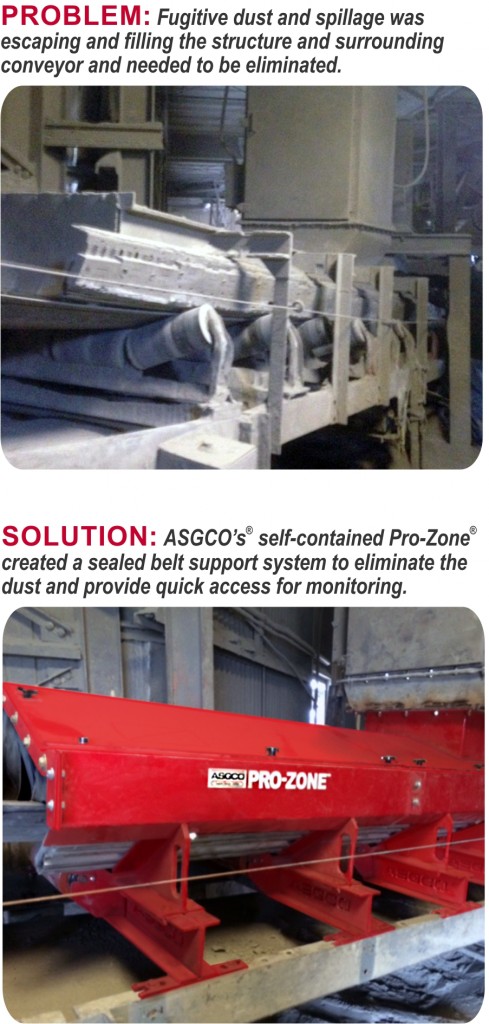
The challenge was to eliminate the fugitive dust and spillage and the additional costs incurred
for the time and effort taken in the removal of the material, plus any disposal fees. Access will
also need to be provided to insure proper operation and allow for serviceability of the load zone.
Solutions:
It was recommended that they install the Pro-Zone™ modular conveyor belt load zone system
to optimize the air/dust sealing of the receiving conveyor belt. ASGCO® engineers worked
closely with our trained servicing distributor and designed a specific, self-contained system
based on the parameters of this particular conveyor. Belt speed, material weight, size and
air flow, were among the many factors that were taken into consideration when designing
the system. CEMA design standards of 20° transition idlers before and 35° troughing idlers
after the Pro-Zone™ were also addressed. The Pro-Zone™ was designed around the existing
chute and dust collection system. It creates a sealed belt support system with quick access
for monitoring and easy adjustments. The placement of the new custom designed baffles
and expansion pieces tied the new load zone system all together.
Results:
The powdered material no longer plumes into the room. The workers used to kick up this
material and breathe the fugitive dust, just to provide basic maintenance. So the improved
efficiency has also lifted the morale of the maintenance staff as well. The cost of removing
the wasted product has been virtually eliminated by the cement facility. The ASGCO®
Pro-Zone™ System removed a costly obstacle in the company’s procedure and has allowed
for greatly increased production throughout.
[line]
Benefits: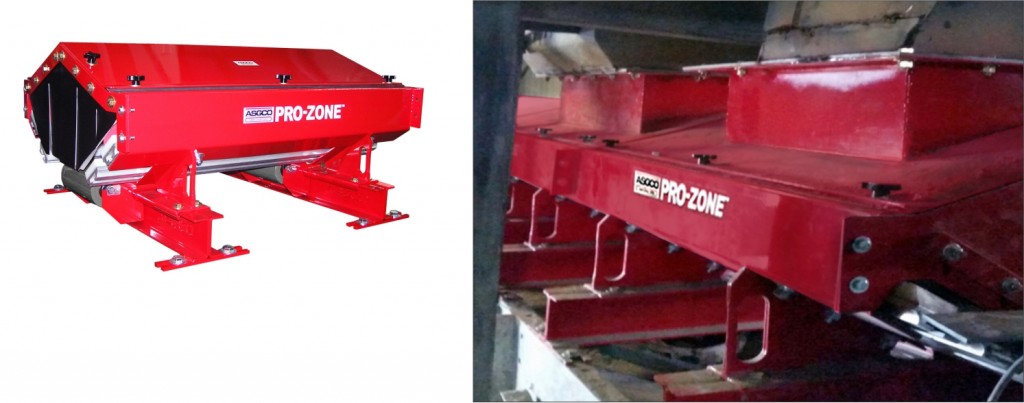
- Environmentally friendly due to reduced
airborne and fugitive dust - Increased productivity and longer belt life
- Lower maintenance costs by having a
‘skirtless’, fully contained system - Modular design for ease of installation and
maintenance of the system - Made in the USA
ASGCO®’s Pro-Zone™ is a patent pending modular conveyor
belt load-zone system that optimizes the sealing for air/dust
tightness of the receiving conveyor belt.