

Challenges
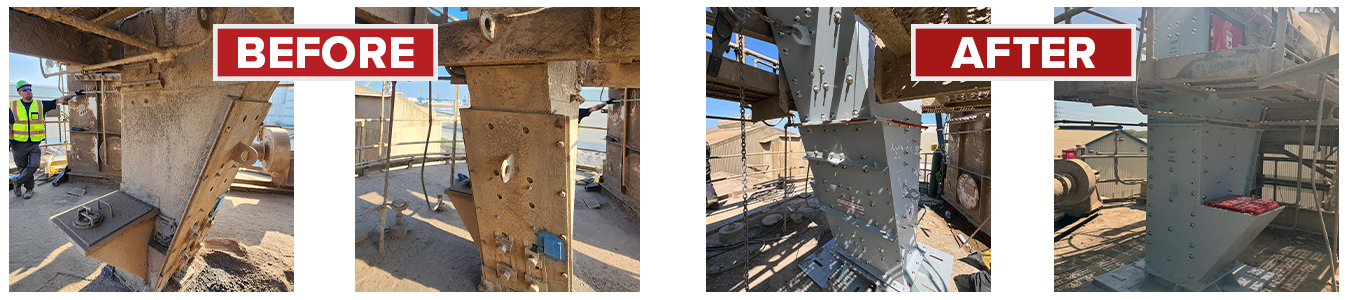
A large cement plant in the Mid-Atlantic was experiencing escalating material spillage issues at the top of a clinker silo. The existing transfer chute had deteriorated significantly over time due to repeated patchwork repairs, leaving it unrepairable and consistently leaking product. An ineffective dribble chute extension failed to capture all discharged material from the belt cleaners, allowing fugitive material to escape and accumulate. This resulted in excessive spillage, poor housekeeping conditions, and increased maintenance demands. Additionally, the chute’s inspection doors were difficult to operate, limiting safe and efficient access for maintenance personnel and extending service times.
Solution
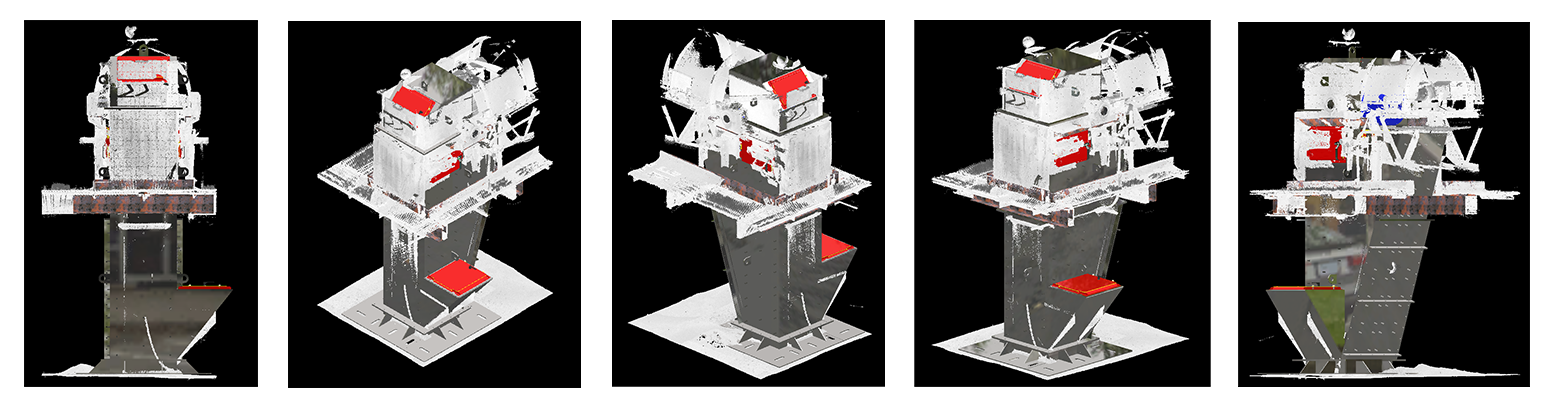
Our engineers conducted a comprehensive 3D Point Cloud Scan of the chute system to accurately assess the structure and identify key inefficiencies. Using this data, a complete chute redesign was developed to address the root causes of material loss and maintenance challenges. The new chute design was extended to fully encapsulate the belt cleaners, eliminating the need for a dribble chute and removing previous escape points that caused spillage. The system was also engineered with an improved slope angle to prevent material buildup and plugging. To further enhance maintenance efficiency, four strategically positioned inspection doors were integrated into the design, allowing for safer and easier access during routine inspections and service.
Results
Following installation, the improvements were immediate and significant. Material spillage was effectively eliminated, resulting in much cleaner operation and greatly improved housekeeping conditions. The redesigned chute ensured proper material containment and flow, enhancing overall system efficiency. Maintenance access was significantly improved, reducing service time and increasing safety for personnel. The upgraded system transformed a previously problematic transfer point into a reliable, high-performing asset, delivering measurable gains in operational efficiency and long-term performance.